Israel Defense Minister Says Troops Will Stay 'Indefinitely' in Lebanon, Syria, and Gaza
68%


Neutral Summary
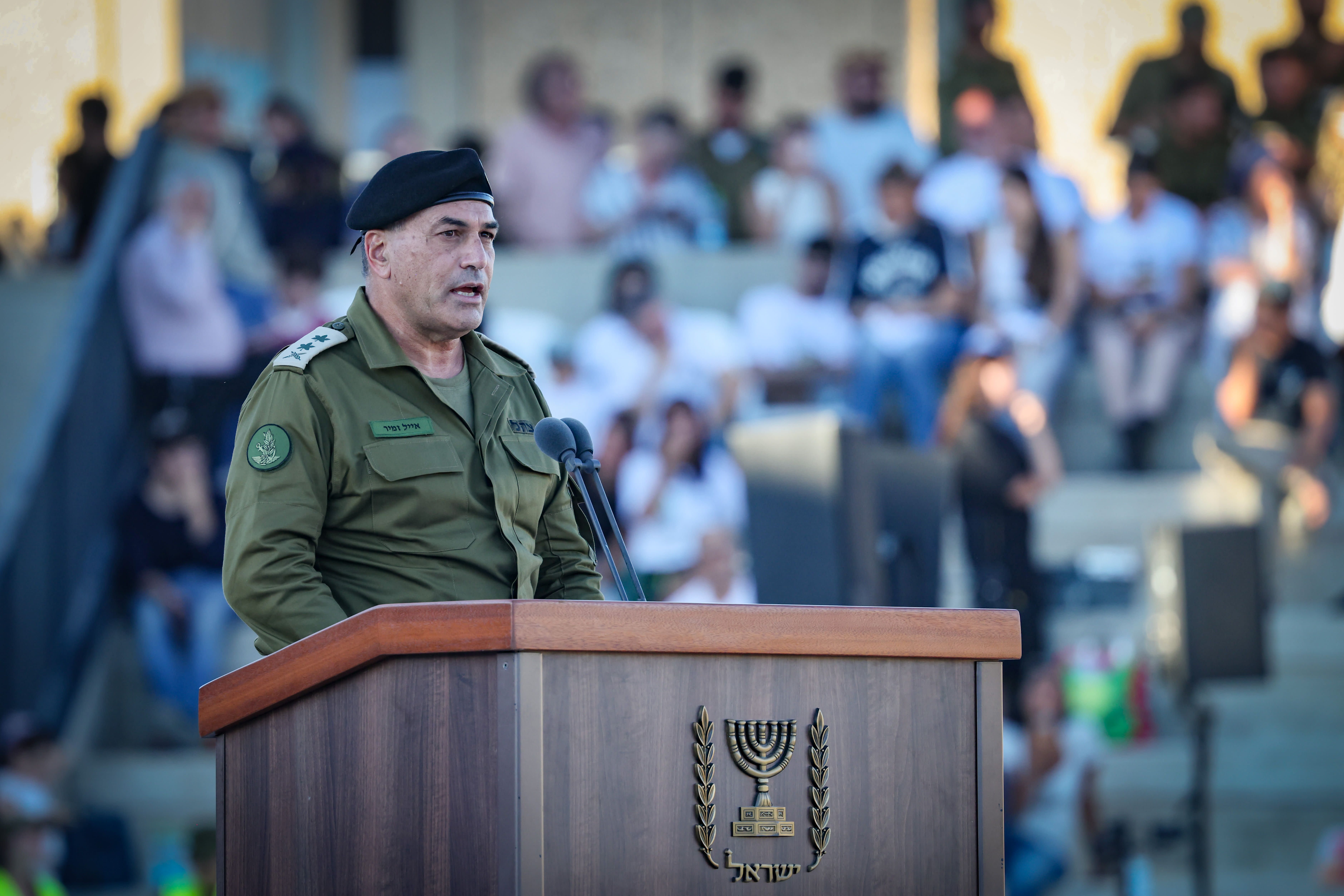
Israeli Defense Minister Israel Katz declared on Wednesday, July 1, that Israeli forces would remain in self-described 'security zones' in southern Lebanon, Syria, and Gaza for an indefinite period. Speaking at a memorial ceremony for soldiers killed in the 2006 Lebanon War, Katz stated the IDF would not withdraw from these areas, citing the need to protect Israeli residents from what he termed 'jihadist elements.' According to Israeli officials, Israeli forces currently control roughly 2,000 square kilometers of Lebanese territory — approximately one-fifth of the country — and occupy nearly 70 percent of Gaza. Israel also occupies a buffer zone in southern Syria following the fall of President Bashar Assad in December 2024. A US-sponsored framework agreement was signed between Lebanon and Israel on June 26, which Lebanese President Joseph Aoun defended as upholding state sovereignty. The agreement links an Israeli withdrawal from southern Lebanon to the disarmament of Hezbollah. Hezbollah has rejected the deal, arguing it would give Israel a free hand to operate inside Lebanon. The Lebanese Health Ministry and the UN report that nearly 4,300 people have been killed in Israeli strikes since fighting escalated in March 2026, when Hezbollah fired rockets at Israel. Israel says it has lost 38 soldiers and one civilian contractor in Lebanon since March. Separately, Israeli and US military officials met to advance coordination mechanisms related to the deployment of the Lebanese Army in southern Lebanon. The pilot-phase withdrawal from two Lebanese areas, Zawtar and Frun, has been delayed pending establishment of a joint oversight mechanism between Israeli and Lebanese armies. Iran has made an end to Israeli military operations in Lebanon a condition in its ongoing US-mediated peace talks. Katz also warned that Iran would be struck with 'full force' if it retaliated over Israeli operations in Lebanon.
Saudi Arabia2Israel1India1Turkey1Germany1Russia1Iran1Narratives by Country
Saudi Arabia
2 sourcesSaudi Arabian media collectively present a moderately balanced picture, covering both the Israeli indefinite presence declaration and the Lebanese government's defense of the framework agreement as a path toward sovereignty and stability. Arab News takes a broader diplomatic view, contextualizing the situation within regional security dialogues, while Okaz focuses more narrowly on the procedural delay in Israeli withdrawals and Netanyahu's statements. Both sources avoid strongly condemnatory language toward Israel while giving space to Lebanese and Arab perspectives, reflecting Saudi Arabia's interest in regional stability and its involvement in US-led security frameworks.
Saudi Arabia
Arab News provides broad, multi-faceted coverage, including Katz's indefinite presence declaration, Lebanese President Aoun's defense of the framework agreement, and a regional security dialogue in Bahrain that for the first time included Syria and Lebanon. The coverage balances Israeli and Lebanese governmental perspectives and frames the framework agreement as a potential pathway toward stability, while acknowledging Hezbollah's opposition and domestic Lebanese divisions.
The framework agreement is presented as a diplomatic opening for regional stability, with the indefinite Israeli presence seen as a complicating but manageable factor within ongoing negotiations.
"Lebanon is a sovereign state and negotiates on its own behalf."
Saudi Arabia
Okaz reports on the postponement of the pilot phase in southern Lebanon pending the establishment of a joint oversight mechanism, while also covering Netanyahu and Katz's tour of the security zone and Netanyahu's statements affirming Israel's commitment to remaining in southern Lebanon until the Hezbollah threat is eliminated. It also notes Netanyahu's acknowledgment of differences of opinion with Trump.
The delay in the withdrawal pilot phase and Netanyahu's firm stance on maintaining the security zone are presented as key developments in the ongoing Lebanon situation.
"The most important thing we did here in southern Lebanon is establish buffer zones, security zones, not on our side of the border, but on their side."
Israel
Israel
The Jerusalem Post focuses on Israeli-American military coordination efforts aimed at deploying the Lebanese Army in southern Lebanon while keeping Hezbollah disarmed, framing the process as a careful diplomatic and security effort. It also covers a domestic Israeli controversy involving a rabbi who verbally attacked the IDF Chief of Staff. The reporting reflects Israeli official positions on maintaining pressure on Hezbollah while pursuing partial withdrawals conditioned on security guarantees.
Israel's indefinite presence is framed as a security necessity, paired with active diplomacy to achieve conditions for eventual partial withdrawal.
India
India
The Hindu provides a brief, factual report on Katz's declaration that Israeli troops will remain indefinitely in Lebanon, Syria, and Gaza, noting the US-sponsored framework agreement signed on June 26 aimed at peace and Hezbollah's disarmament. The coverage is restrained and neutral, presenting the core facts without strong editorial framing.
Straightforward factual reporting of the Israeli defense minister's statement with minimal editorial elaboration.
Turkey
Turkey
Anadolu Agency focuses specifically on the Israeli postponement of the pilot withdrawal from two areas in southern Lebanon, Zawtar and Frun, reporting that Israeli sources cited the need to first establish a joint oversight mechanism between the two armies. The report is brief and factual, zeroing in on the delay aspect of the broader story.
The focus is on Israeli delay of withdrawal from Lebanese territory, framing the postponement as an obstacle to the implementation of the framework agreement.
Germany
Germany
Zeit Online reports Katz's indefinite presence declaration with particular attention to the humanitarian and political implications, noting that displaced Lebanese civilians cannot yet return home and that far-right members of the Israeli government have repeatedly demanded the settlement of the security zone. The report also highlights Israel's occupation of 70 percent of Gaza and the UN-monitored buffer zone in Syria.
Israel's indefinite occupation is framed through a humanitarian and political lens, emphasizing displacement, far-right annexation demands, and the absence of a withdrawal timeline.
Russia
Russia
RT frames Israel's indefinite military presence as an occupation policy, emphasizing the scale of Israeli territorial control in Lebanon and Katz's warnings to Iran. It highlights Hezbollah's rejection of the US-brokered deal and the mass protests in Beirut, while contextualizing the move within Netanyahu's broader 'total victory' doctrine against Iran and its allies.
Israel's declaration is framed as an expansionist occupation policy threatening regional stability and conflicting with ceasefire conditions set by Iran.
"The IDF will not withdraw and will remain in the security zones in Lebanon, Syria, and Gaza for an unlimited period of time."
Iran
Iran
Tehran Times frames Israel's indefinite military presence not as a security measure but as a sign of strategic failure of the military victory doctrine, arguing that Israel is shifting toward political and institutional control mechanisms because military force alone cannot eliminate Hezbollah. The outlet consistently uses terms like 'occupation regime' and 'IOF' (Israeli Occupation Forces) and portrays Hezbollah as a legitimate resistance rooted in popular support that cannot be permanently defeated militarily.
Israel's indefinite presence signals the failure of its 'total victory' doctrine and represents a redefinition of occupation strategy rather than genuine security policy.
"Resistance movements rooted in popular support and regional alliances cannot easily be removed permanently from the equation through military force alone."
What's Being Silenced
- Nearly 4,300 people have been killed in Lebanon and approximately one million displaced since the war escalated in March 2026, per the Lebanese Health Ministry and the UN. (Mentioned by: RT, Arab News)
- Far-right members of the Israeli government have repeatedly demanded the permanent settlement and annexation of the Lebanese security zone. (Mentioned by: Zeit Online)
- Hezbollah rejected the US-brokered framework agreement, arguing it gives Israel a free hand inside Lebanon, and the deal sparked mass protests in Beirut. (Mentioned by: RT, Arab News)
- Iran made an end to Israeli military operations in Lebanon a formal condition in its ongoing US-mediated peace talks. (Mentioned by: RT)
- Israel controls roughly 2,000 square kilometers of Lebanese territory — approximately one-fifth of the country — as of June 2026. (Mentioned by: RT, Zeit Online)
- Nearly 4,300 people have been killed in Lebanon and approximately one million displaced since the war escalated in March 2026, per the Lebanese Health Ministry and the UN. (Mentioned by: RT, Arab News)
- Far-right members of the Israeli government have repeatedly demanded the permanent settlement and annexation of the Lebanese security zone. (Mentioned by: Zeit Online)
- Hezbollah rejected the US-brokered framework agreement, arguing it gives Israel a free hand inside Lebanon, and the deal sparked mass protests in Beirut. (Mentioned by: RT, Arab News)
- Iran made an end to Israeli military operations in Lebanon a formal condition in its ongoing US-mediated peace talks. (Mentioned by: RT)
- Israel controls roughly 2,000 square kilometers of Lebanese territory — approximately one-fifth of the country — as of June 2026. (Mentioned by: RT, Zeit Online)
- Nearly 4,300 people have been killed in Lebanon and approximately one million displaced since the war escalated in March 2026, per the Lebanese Health Ministry and the UN. (Mentioned by: RT, Arab News)
- Far-right members of the Israeli government have repeatedly demanded the permanent settlement and annexation of the Lebanese security zone. (Mentioned by: Zeit Online)
- Hezbollah rejected the US-brokered framework agreement, arguing it gives Israel a free hand inside Lebanon, and the deal sparked mass protests in Beirut. (Mentioned by: RT, Arab News)
- Iran made an end to Israeli military operations in Lebanon a formal condition in its ongoing US-mediated peace talks. (Mentioned by: RT)
- Israel controls roughly 2,000 square kilometers of Lebanese territory — approximately one-fifth of the country — as of June 2026. (Mentioned by: RT, Zeit Online)
- Nearly 4,300 people have been killed in Lebanon and approximately one million displaced since the war escalated in March 2026, per the Lebanese Health Ministry and the UN. (Mentioned by: RT, Arab News)
- Far-right members of the Israeli government have repeatedly demanded the permanent settlement and annexation of the Lebanese security zone. (Mentioned by: Zeit Online)
- Hezbollah rejected the US-brokered framework agreement, arguing it gives Israel a free hand inside Lebanon, and the deal sparked mass protests in Beirut. (Mentioned by: RT, Arab News)
- Iran made an end to Israeli military operations in Lebanon a formal condition in its ongoing US-mediated peace talks. (Mentioned by: RT)
- Israel controls roughly 2,000 square kilometers of Lebanese territory — approximately one-fifth of the country — as of June 2026. (Mentioned by: RT, Zeit Online)
- Nearly 4,300 people have been killed in Lebanon and approximately one million displaced since the war escalated in March 2026, per the Lebanese Health Ministry and the UN. (Mentioned by: RT, Arab News)
- Hezbollah rejected the US-brokered framework agreement, arguing it gives Israel a free hand inside Lebanon, and the deal sparked mass protests in Beirut. (Mentioned by: RT, Arab News)
- Iran made an end to Israeli military operations in Lebanon a formal condition in its ongoing US-mediated peace talks. (Mentioned by: RT)
- Nearly 4,300 people have been killed in Lebanon and approximately one million displaced since the war escalated in March 2026, per the Lebanese Health Ministry and the UN. (Mentioned by: RT, Arab News)
- Far-right members of the Israeli government have repeatedly demanded the permanent settlement and annexation of the Lebanese security zone. (Mentioned by: Zeit Online)
- Hezbollah rejected the US-brokered framework agreement, arguing it gives Israel a free hand inside Lebanon, and the deal sparked mass protests in Beirut. (Mentioned by: RT, Arab News)
- Iran made an end to Israeli military operations in Lebanon a formal condition in its ongoing US-mediated peace talks. (Mentioned by: RT)
- Israel controls roughly 2,000 square kilometers of Lebanese territory — approximately one-fifth of the country — as of June 2026. (Mentioned by: RT, Zeit Online)
- Far-right members of the Israeli government have repeatedly demanded the permanent settlement and annexation of the Lebanese security zone. (Mentioned by: Zeit Online)
- Far-right members of the Israeli government have repeatedly demanded the permanent settlement and annexation of the Lebanese security zone. (Mentioned by: Zeit Online)
- Iran made an end to Israeli military operations in Lebanon a formal condition in its ongoing US-mediated peace talks. (Mentioned by: RT)
- Israel controls roughly 2,000 square kilometers of Lebanese territory — approximately one-fifth of the country — as of June 2026. (Mentioned by: RT, Zeit Online)
Original Sources